

How Gen AI is transforming the food and beverage workforce
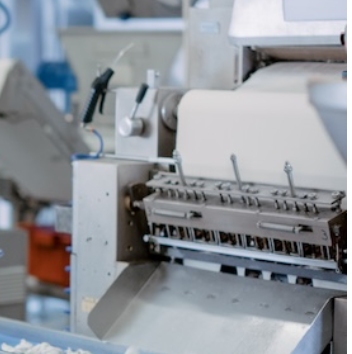
Generative artificial intelligence (Gen AI) is transforming how AI supports workers, both in consumer experiences and industrial environments. In manufacturing, Gen AI is increasingly seen as a powerful tool for enhancing workflow efficiency, especially on the factory floor, where it’s helping to foster a more engaging and productive work culture.
A persistent challenge for food and beverage manufacturers has been attracting younger workers to shop floor roles, positions often perceived as dull, dirty or dangerous.
Fortunately, the rise of Gen AI, along with technologies like augmented and virtual reality, is revolutionizing these spaces.
Today’s factory floor is evolving into a more dynamic, tech-enabled environment that offers a rewarding employee experience and a more desirable place to work.
A growing industry meets a new era of work
Canada’s food and beverage manufacturing industry was made up of nearly 15,000 establishments in 2024, contributing $35.2B in 2023 to Canada’s GDP and employing over 315,000 workers.
Global AI in food and beverages market size is being calculated at an all-time high of $21 billion in 2025 and growing exponentially over the next decade. That means training and reskilling frontline workers with different levels of knowledge, competence and language issues is vital while keeping practices health and safety compliant for the new tech-enabled manufacturing era. Enter Gen AI and the new generation of connected worker platforms, where content creation and delivery are in their DNA.
Not only is Gen AI in food and beverage manufacturing a win for workers, but it is also a win for Consumer Packaged Goods (CPG) companies globally, where Gen AI use cases could increase the economic impact of traditional AI by 15 to 40 per cent. In an article by McKinsey & Company, the consulting firm estimated that bridging that gap means unlocking an additional $160 billion to $270 billion annually in profit, and part of this can be achieved through an enhanced workflow among increasingly connected workforces.
Powering a motivated frontline
Bringing new technologies, such as connected worker platforms and Gen AI to the shop floor contributes to a more engaging, modern workplace. This transformation is especially important as manufacturers look to attract and retain younger workers. Gen Z, in particular, is more familiar with AI tools thanks to their integration into education and everyday life. These workers are used to searching for answers online and expect digital access to information in the workplace. Making instructions and training materials available digitally is not just a convenience; it’s a necessity for retaining younger talent and empowering them to take ownership of their roles.
This shift is especially relevant in the food and beverage processing industry, where the need for speed, accuracy and adaptability is high. Gen AI helps meet these demands by enabling faster onboarding, better knowledge transfer, and more personalized support.
Expanding capabilities and retaining talent
One of the biggest challenges facing the food and beverage manufacturing industry is not just recruiting skilled frontline workers, but keeping them. Technology, particularly Gen AI, offers a powerful solution.
Here’s how AI is helping manufacturers sustain and inspire their workforce:
1. Boosting efficiency through smarter content delivery
Frontline workers need clear, concise instructions that are easy to understand and quick to access. But creating and maintaining this content, especially across multiple formats and languages, can be time-consuming and expensive.
Most CPG factories already have thousands of documents, including standard operating procedures (SOPs) and work instructions. Converting these into accessible digital formats is a major undertaking. According to a global Lenovo survey of 600 IT leaders, 79 per cent believe AI will free employees to focus on more meaningful work — critical in an industry where deadlines are tight and products have a limited shelf life.
Gen AI can help by automating the conversion of existing documents into digital work instructions, reducing the time and cost involved while improving accessibility and usability.
2. Providing multi-format task guidance
AI-powered content transformation tools can streamline the creation of digital instructions in various formats — text, video, and images. This is especially valuable for younger workers, who prefer visual learning. In fact, a 2025 report found that 57 per cent of Gen Zers prefer to learn about new products through short-form videos.
Creating video-based instructions has traditionally been a challenge for factories with limited resources. But Gen AI changes the game. It can extract relevant information from existing documents, sequence it into structured steps, and even generate visual guides. This not only improves engagement but also preserves institutional knowledge by capturing the expertise of senior operators.
Workers can access step-by-step visual guides for tasks, improving troubleshooting and reducing downtime. This approach also supports continuous learning and helps bridge the gap between experienced and new employees.
3. Breaking language barriers with AI transcription
In Canada, over 30 per cent of manufacturing workers are immigrants, many of whom speak a language other than English at home. Yet most global food and beverage manufacturers struggle to provide multilingual content.
AI-powered transcription and translation tools can break down these barriers by converting audio and video content into subtitles in multiple languages, quickly and accurately. Unlike human translators, Gen AI tools can process recordings in minutes, making it easier to keep content up to date and accessible.
This improves comprehension, safety, and productivity on the shop floor, while also promoting inclusion and equity among a diverse workforce.
4. Enhancing communication with intelligent search
In fast-paced, noisy environments, clear communication is essential. Mistakes are inevitable, but Gen AI can help reduce them by enabling smarter, more intuitive search capabilities.
AI tools can interpret user input, even with typos or vague phrasing and deliver accurate, relevant answers. For example, if a worker needs to troubleshoot a jammed mixing machine, they can simply ask a question in natural language and receive step-by-step guidance.
Poka, a connected worker platform, recently added embedded AI semantic functionality to improve its internal search engine.
Its new “Ask a Question” feature allows users to bypass lengthy content libraries and get direct answers, referencing verified knowledge articles to ensure accuracy and avoid AI hallucinations.
The future is now
As the number of Canadian food and beverage manufacturers interested in buying into Gen AI tools to aid factory functions, we will see the rise of increasingly connected and engaged workers on the shop floor. Gen AI continues to not only support but also strengthen many practices within food and beverage manufacturing, providing more efficient and rewarding work for manufacturers and workers alike, driving production efficiency and prompting an engaged and empowered workforce.
1.The news above mentioned with detailed source are from internet.We are trying our best to assure they are accurate ,timely and safe so as to let bearing users and sellers read more related info.However, it doesn't mean we agree with any point of view referred in above contents and we are not responsible for the authenticity. If you want to publish the news,please note the source and you will be legally responsible for the news published.
2.All news edited and translated by us are specially noted the source"CBCC".
3.For investors,please be cautious for all news.We don't bear any damage brought by late and inaccurate news.
4.If the news we published involves copyright of yours,just let us know.
BRIEF INTRODUCTION
Cnbearing is the No.1 bearing inquiry system and information service in China, dedicated to helping all bearing users and sellers throughout the world.
Cnbearing is supported by China National Bearing Industry Association, whose operation online is charged by China Bearing Unisun Tech. Co., Ltd.
China Bearing Unisun Tech. Co., Ltd owns all the rights. Since 2000, over 3,000 companies have been registered and enjoyed the company' s complete skillful service, which ranking many aspects in bearing industry at home and abroad with the most authority practical devices in China.
