
Intel's self-driving car unit plans to step up use of its own radar tech by 2025
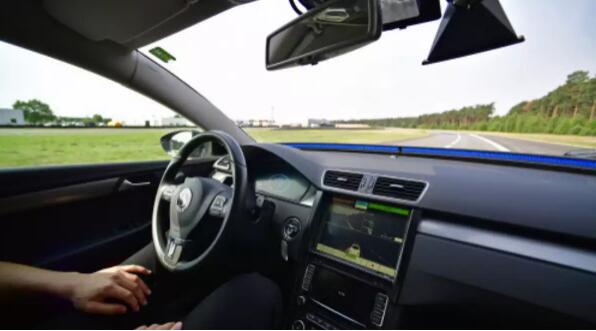
The head of Intel Corp's self-driving car subsidiary said on Tuesday the company wants to shift toward using its own radar-based technology and use a single lidar sensor per vehicle by 2025 in a bid to lower the cost of autonomous driving.
Mobileye has taken a different strategy from many of its self-driving car competitors, with a current camera-based system that helps cars with adaptive cruise control and lane change assistance. Those systems are on the road today and are gathering data to help Mobileye map the roads in new cities.
For more advanced systems, the company plans to add both radar sensors, which use radio waves to detect distance from objects, and lidar, a laser-based system that helps self-driving vehicles gain a three-dimensional view of the road. For a planned fleet of so-called robotaxis, which are commercial vehicles meant to ferry around passengers, the company is tapping sensors from Luminar Technologies Inc.
In a presentation a the Consumer Electronics Show, Chief Executive Amnon Shashua said on Tuesday that Mobileye's robotaxis will use multiple Luminar units to gain 360-degree lidar, radar and camera coverage all around the vehicle. The robotaxis rolling out in at least eight cities starting in 2022 will each have four Luminar units, Shashua said in a subsequent question and answer session.
But Mobileye is also developing its own lidar sensor that it plans to start using in 2025 for cars aimed at consumers.
That 2025 consumer system will feature a single lidar unit facing the front of the vehicle, while cameras and a new radar-based system that Mobileye is also developing will cover the entire vehicle. Shashua said Mobileye is developing new ways to process radar data with software that will make radar more powerful. Radar sensors are cheaper than lidar but give a less detailed image.
"The difference between radars and lidars in terms of cost is an order of magnitude," he said. "No matter what people tell you about how to reduce the cost of lidar, radar is ten times lower. We are building lidars, so I know exactly the cost of the lidars."
In a statement, Mobileye said it plans to continue to use Luminar lidars "as much as possible" after introducing its own lidar sensors. Mobileye plans to offer its self-driving technology to automakers as separate components, meaning that automakers could choose a Mobileye system but use Luminar sensors for the lidar units.
Luminar declined to comment.
1.The news above mentioned with detailed source are from internet.We are trying our best to assure they are accurate ,timely and safe so as to let bearing users and sellers read more related info.However, it doesn't mean we agree with any point of view referred in above contents and we are not responsible for the authenticity. If you want to publish the news,please note the source and you will be legally responsible for the news published.
2.All news edited and translated by us are specially noted the source"CBCC".
3.For investors,please be cautious for all news.We don't bear any damage brought by late and inaccurate news.
4.If the news we published involves copyright of yours,just let us know.



Next Tata Elxsi Q3 results: Net profit up 39.5% at Rs 105 cr
BRIEF INTRODUCTION
Cnbearing is the No.1 bearing inquiry system and information service in China, dedicated to helping all bearing users and sellers throughout the world.
Cnbearing is supported by China National Bearing Industry Association, whose operation online is charged by China Bearing Unisun Tech. Co., Ltd.
China Bearing Unisun Tech. Co., Ltd owns all the rights. Since 2000, over 3,000 companies have been registered and enjoyed the company' s complete skillful service, which ranking many aspects in bearing industry at home and abroad with the most authority practical devices in China.